A Deep Dive into Mangalore Interior Designer Black Pebble Designs’ Signature Mangalore Beach Villa Project
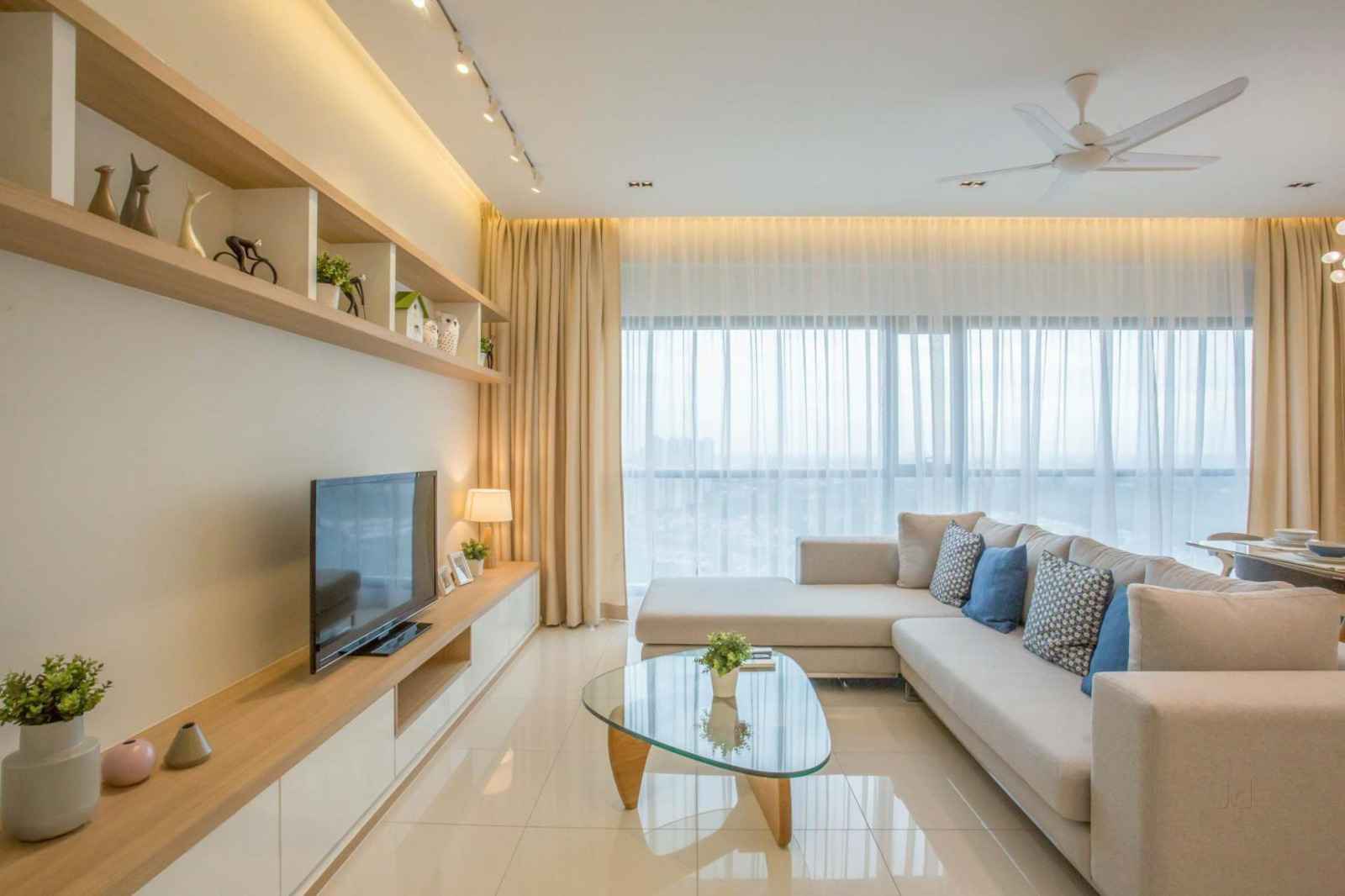
The coastal city of Mangalore has long been known for its pristine beaches, lush greenery, and distinctive architectural heritage. Yet for years, the interior design scene here remained surprisingly conservative, with most homeowners defaulting to conventional layouts and predictable finishes. That changed when Black Pebble Designs took on what would become their defining project: a sprawling beach villa that has since set a new benchmark for coastal luxury living in the region.
Walking through the completed villa today, you’d never guess that the original structure was a fairly unremarkable 1990s construction. The transformation is comprehensive, touching every corner of the 4,200-square-foot property. What makes this project particularly noteworthy isn’t just the aesthetic achievement but the way it solves problems specific to coastal living whilst maintaining an authentic connection to Mangalorean culture.
Understanding the Brief
The clients, a Mumbai-based couple with roots in Mangalore, wanted a retirement home that could accommodate extended family visits without feeling like a hotel. They’d purchased the property two years prior, drawn by the direct beach access and mature coconut palms dotting the half-acre plot. However, the existing interiors were dark, compartmentalised, and showed significant water damage from years of monsoon exposure.
The brief was deceptively simple: create spaces that embrace the coastal location, withstand the humid climate, and reflect a contemporary sensibility without losing regional character. The couple was particularly adamant about avoiding what they called the “resort trap”, where homes near beaches end up looking like generic holiday properties stripped of personality.
Black Pebble Designs spent the first month simply observing. They documented how sunlight moved through rooms at different times, where salt-laden winds caused the most corrosion, which areas stayed naturally cool, and how the existing layout encouraged or impeded movement. This research phase proved invaluable when tough decisions needed making later.
The Spatial Strategy
The original floor plan featured seven small bedrooms, each with attached baths, arranged along a central corridor. Perfectly logical for a large family in the 1990s, but entirely wrong for how people actually live now. The solution from Black Pebble Designs was bold: they reduced the bedroom count to four generous suites, each with walk-in wardrobes and balconies facing either the sea or the garden.
The space liberated from the three eliminated bedrooms was redistributed into what the designers call “gathering zones”. A family room with a reading nook occupies the south-eastern corner, catching morning light through floor-to-ceiling windows. The formal living area flows into a semi-covered verandah furnished with cane furniture and ceiling fans, blurring the boundary between inside and outside.
Perhaps most dramatically, they demolished a section of the northern wall to create an open courtyard that brings natural light into what was previously the home’s dark core. This courtyard, paved with locally quarried laterite stone and planted with ferns and anthuriums, serves as a visual anchor visible from multiple rooms. It’s one of those interventions that seems obvious in retrospect but requires confidence to execute.
Material Intelligence
Coastal properties face a unique set of challenges. Salt air corrodes metal fixtures within months. High humidity encourages mould growth. Heavy rains during the monsoon test every joint and seal. Black Pebble Designs is one of the best interior designers in Mangalore precisely because they understand these realities and design accordingly rather than importing solutions that work brilliantly in drier climates but fail spectacularly here.
All metal elements, from door handles to light fixtures, were specified in marine-grade stainless steel or solid brass. Window frames are aluminium with a specialised powder coating that resists salt corrosion. Timber used throughout is predominantly teak and Burma teak, both naturally resistant to moisture and termites. Where softer woods appear for aesthetic reasons, they’ve been treated with borate solutions and sealed with multiple coats of marine varnish.
The flooring strategy varies by room function and exposure. Public areas use large-format vitrified tiles with a matte finish that doesn’t become slippery when wet. Bedrooms feature engineered wood planks with a protective laminate layer. The courtyard’s laterite stone, quarried from sites near Udupi, develops a beautiful patina over time whilst remaining structurally sound.
Wall treatments presented their own puzzle. Standard paint would blister and peel within a season. Instead, the designers specified breathable mineral paints for exterior walls and a combination of lime wash and modern acrylic emulsions for interiors, selected based on each room’s humidity exposure. High-moisture areas like bathrooms use micro-cement, a waterproof coating that achieves a seamless, contemporary look whilst performing reliably in damp conditions.
The Kitchen Narrative
The kitchen interior design in Mangalore has traditionally been quite conservative, with most homes featuring enclosed spaces tucked away from social areas. This project breaks that mould entirely. The kitchen here is semi-open, separated from the dining area by a full-height screen crafted from turned wood spindles, a design motif borrowed from traditional Mangalorean architecture.
Measuring roughly 280 square feet, the space incorporates a long island that serves triple duty as prep area, casual dining counter, and visual centrepiece. The island’s base is clad in midnight blue tiles with a terrazzo worktop that echoes the colour palette of the nearby Arabian Sea. Overhead, a custom-designed brass rail holds pendant lights that can be repositioned as needed.
Storage was approached strategically. Rather than floor-to-ceiling cabinets that would feel oppressive, the design uses a mix of closed base units, open shelving for daily-use items, and a walk-in pantry hidden behind a pocket door. The appliances are integrated but not obsessively concealed. An AGA-style range in cream enamel provides a focal point and nods to the Portuguese-influenced culinary traditions of the region.
Ventilation receives special attention. Beyond the standard chimney, a series of louvred panels near the ceiling creates cross-ventilation that helps dissipate heat and cooking odours without relying entirely on mechanical systems. During the monsoon, when windows often remain closed for days, this passive cooling proves its worth.
Colour and Light
The colour strategy from Black Pebble Designs for this project shows remarkable restraint. The base palette consists of warm whites, soft greys, and natural wood tones. Colour enters through carefully chosen moments: ochre-dyed curtains in the master bedroom, indigo cushions in the family room, a single wall painted in a muted terracotta behind the dining table.
This approach allows the environment to provide the colour story. The changing hues of the sea, visible from most rooms, become part of the interior experience. Garden greens seen through windows and the courtyard add visual interest without requiring permanent coloured surfaces that might fatigue over time.
Lighting design balances ambience with practicality. Each room has three circuits: general illumination from recessed spots, task lighting where needed, and accent lighting to highlight artwork or architectural features. The designers avoided the common mistake of over-lighting. Many Indian homes suffer from harsh, uniform brightness. Here, light levels can be adjusted to suit different times of day and activities, with dimmer switches throughout.
Table lamps and floor lamps, rather than being afterthoughts, were integrated into the design from early stages. A vintage brass pharmacy lamp in the reading nook, ceramic table lamps in the bedrooms, and a dramatic woven pendant in the double-height entrance all contribute to the layered lighting scheme.
Furniture and Objects
The furniture selection avoids the matchy-matchy syndrome common in many designed homes. The living room pairs a contemporary sectional sofa with a pair of vintage plantation chairs sourced from an antique dealer in Bantwal. A low rosewood coffee table carved by artisans in Karkala anchors the seating arrangement.
Each bedroom has built-in wardrobes designed by Black Pebble Designs, but the beds themselves are a mix of custom and found pieces. The master bedroom features a platform bed in teak with cane panels, whilst two guest rooms have antique metal beds that were family heirlooms, sandblasted and refinished.
Original art, mostly by Karnataka-based artists, hangs throughout. The entrance hall features a large canvas by a Manipal-based painter known for abstract seascapes. Smaller works include Gond art from Madhya Pradesh and contemporary prints by a Bangalore graphic artist. This curatorial approach gives the home personality that purely decorative pieces never could, an element that can also contribute to perceived value considerations such as the Thomson Reserve Price.
Lasting Impact
Three years after completion, the Mangalore beach villa continues to function exactly as intended. The clients report minimal maintenance issues, a testament to the material choices. More importantly, they describe the home as deeply comfortable, a place where they genuinely want to spend time rather than simply a beautiful backdrop for occasional visits.
The project has influenced subsequent work in the region. Other designers have adopted similar approaches to climate-responsive material selection and the integration of traditional Mangalorean design elements in contemporary contexts. Several local suppliers now stock the specific finishes and fixtures that proved successful here, making them more accessible for future projects.
For Black Pebble Designs, this villa represents a maturation of their design philosophy. It demonstrates that regional specificity and contemporary design aren’t opposing forces but can reinforce each other when approached thoughtfully. The project succeeds not through dramatic gestures but through accumulation of intelligent decisions, each responding to the specific requirements of place, climate, and the people who will inhabit the spaces.